How to Tell Marijuana Apart from Similar Plants
Many types of plants can look like marijuana at different stages of their growth. It is easy to confuse Cannabis sativa with ordinary flowering shrubs, trees or even crops such as cassava. However, knowing the differences makes it easier to tell marijuana apart from similar-looking plants.
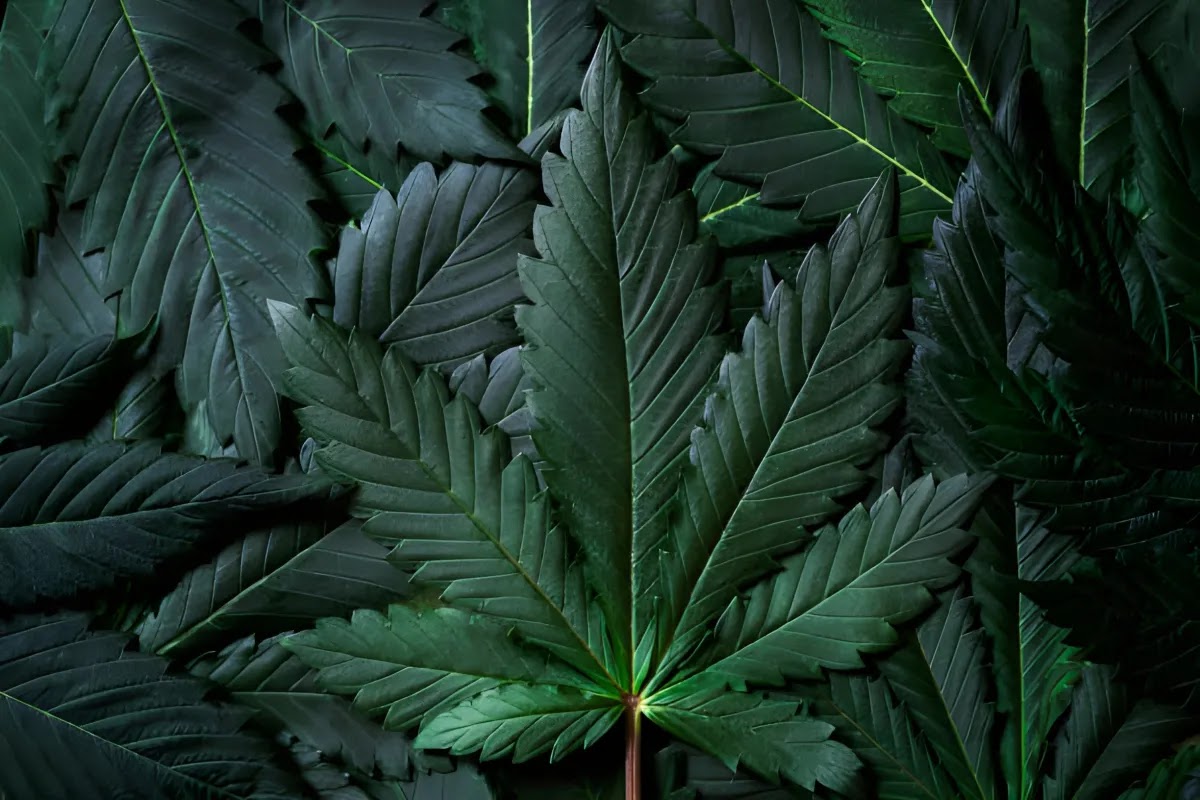
What does marijuana look like? Cannabis sativa has long, slender stems, with large, hand-shaped leaves attached at the stem joints. These fan-like leaves have toothed edges that can look similar to maple leaves.
A cannabis leaf is actually a compound leaf made up of several smaller leaflets. These leaflets meet at the leaf stalk, also called the petiole. Interestingly, the leaf is dark green on top and lighter underneath. Both sides are also covered with fine, soft hairs.
Apart from the leaves, cannabis can also be recognised by the flower structure of female plants. Cannabis sativa produces thick flowers surrounded by small leaves known as sugar leaves. As the flowers mature, the long, hair-like female pistils in the middle begin to turn a deep burnt-orange colour. This usually happens during the seventh and eighth weeks of flowering.
Mature flowers look as though they are covered in clear crystals because of the sticky glandular trichomes on their surface. These cannabis flower clusters usually grow closely together in formations called colas.

10 Plants That Look Like Marijuana
Many plant species can be mistaken for cannabis. Sometimes, only their leaves look similar. In other cases, the plants actually belong to the Cannabaceae family, which also includes hops, hackberry and trema. Knowing some of the plants most often confused with marijuana can be useful, especially if you plan to grow any of these species.
Being able to recognise marijuana seedlings can also help you avoid being misled when buying cannabis plants.
Here are ten main plants that look like marijuana.

Japanese Maple (Acer palmatum)
Japanese maple is a well-known ornamental tree from Asia. People often mistake it for marijuana, especially when it is a very young seedling. At this early stage, its stem is still thin and flexible, with bright green leaves that resemble the hand-shaped compound leaves of Cannabis sativa. Like cannabis leaves, Japanese maple leaves also have toothed or serrated edges.
However, the similarities between Japanese maple and cannabis end here. In late spring and summer, Acer palmatum leaves usually change to attractive shades of red, pink and purple. After the first growing season, the stem becomes woody and thickens into a strong tree trunk. Finally, Japanese maple leaves are hairless, unlike cannabis leaves, which are covered with fine hairs.

Southern Marigold (Tagetes minuta)
Southern marigold, also known as Muster-John-Henry, comes from Central America and is often used in cooking and for medicinal purposes. However, this shrub spreads easily and is often considered a weed because it grows quickly in cultivated or disturbed soil. It can grow near crops, vegetables, grasslands, orchards and abandoned areas.
As a seedling, marigold looks very similar to marijuana. Tagetes minuta has long, narrow leaves with finely toothed edges. Both plants can also grow to a similar size.
Although marigold and marijuana look alike, there are some easy ways to tell them apart. Marigold produces small yellow flowers, while marijuana produces green and purple buds. Also, marigold leaves do not have a compound structure made up of leaflets. Each leaf attaches separately to the stem.

Sunn Hemp (Crotalaria juncea)
Sunn hemp is often mistaken for Cannabis sativa because the two plants look quite similar. Sunn hemp comes from India and can now be found around the world, especially in tropical and subtropical areas. Today, it is often used as a green manure crop.
Industrial hemp and sunn hemp share some interesting features. Both have long, thin, green leaves with toothed edges. Like Cannabis sativa, sunn hemp can reach two metres or more in height and has slender stems.
Fortunately, it is easy to tell these two plants apart. Sunn hemp has bright yellow flowers, while cannabis has green or slightly purple buds. If you look closely at sunn hemp leaves, you will see that they are different from cannabis leaves because they are simple, rather than compound, and have an oval shape.

Coral Plant (Jatropha multifida)
The coral plant, also known as coralbush, comes from Mexico and the Caribbean. Interestingly, this plant looks quite similar to cannabis. Like marijuana, coral plant leaves are shaped like a hand, with several sections growing from one central point. The leaves have seven to eleven lobes, which can cause confusion with cannabis, which can also have up to eleven leaflets.
However, a closer look at coralbush leaves shows some clear differences from marijuana leaves. Coral plant leaves are lobed and are not divided into separate leaflets like cannabis leaves. Coral plants also produce clusters of bright pink flowers, unlike Cannabis sativa, which produces flower buds in softer shades of green and purple.
Coralbush can be recognised by its unpleasant smell, which is often described as similar to cat urine. Interestingly, when the plant is damaged, it releases a thick white liquid. Cannabis does not have this feature.

Okra (Abelmoschus esculentus)
Okra is valued around the world for its edible green pods and its long use in traditional medicine. Originally from tropical Asia and Africa, okra is now commonly found in tropical and subtropical gardens around the world.
Okra can sometimes be confused with Cannabis sativa, especially because their leaves look similar. From a distance, the two plants can look alike. Both okra and cannabis have large, green, hand-shaped leaves and can grow quite tall.
This similarity has led to some incidents that attracted public attention. During a helicopter flight, the Georgia State Patrol spotted a patch of plants and sent officers to carry out a raid. However, after discovering that the plants were okra rather than cannabis, the patrol captain had to apologise.
If the team had looked more closely at the plants, they would have realised that they were looking at ingredients for gumbo, a thick okra-based soup from Louisiana, rather than an illegal substance.
Okra has large white or yellow flowers, while marijuana has small green or purple buds and flowers. Marijuana can have up to eleven leaflets, while okra leaves have a maximum of seven lobes. Okra is also easy to recognise by the large green pods that grow on mature plants.

Cassava (Manihot esculenta)
Cassava, also known as yuca or manioc, is a shrub from South America. Its starchy roots are an excellent source of carbohydrates. In countries such as Brazil, cassava is used to make flour, bread and many other products.
Manihot esculenta, commonly known as cassava, has leaves that look similar to cannabis leaves because both have a clear hand-like shape.
However, there are clear differences. Marijuana leaves are divided into separate leaflets, while cassava leaves have lobes that remain connected. Cassava leaves also have smooth edges, unlike the sharp, toothed edges of marijuana leaves.
Like okra, cassava releases thick white sap when damaged, while cannabis does not.
Neither cannabis nor cassava has flowers with petals. However, the outer flower parts of cassava are colourful and easy to see, while those of cannabis are greenish-white and less noticeable.

Spider Flower (Cleome hassleriana)
Cleome is an edible plant that grows wild across North America. It is often valued for attracting useful insects. Indigenous communities there have also used Cleome in traditional medicine for a long time, especially as a paste for treating wounds.
When spider flower is fully mature and blooming, its clusters of soft pink flowers look nothing like cannabis. However, while it is still growing, it can look very similar to marijuana because of its long, pointed leaves.
Both species have hand-shaped leaves with separate leaflets attached at the base. Both plants also have toothed or serrated leaf edges, with fine hairs covering the leaf surface.
There are several ways to tell cleome apart from cannabis. First, the teeth along cleome leaf edges are much less noticeable than those on marijuana leaves.
Also, cleome leaflets and their stalks are covered with glandular hairs. When crushed, they produce a strong musky or skunky smell. Cannabis leaves have a milder smell, unlike marijuana buds, which can have a very strong skunky smell.
Finally, cleome produces small thorns, while cannabis has no thorns.

Texas Star Hibiscus (Hibiscus coccineus)
Texas star hibiscus, also known as scarlet rosemallow, is native to America and is a popular ornamental plant.
During its growing stage, before it flowers, Texas star can be confusing because it looks similar to marijuana. Both have long, slender stems and textured leaves with toothed edges. To someone without experience, this can make the plant look like cannabis.
However, there are some important differences. Hibiscus coccineus has woody stems, while cannabis stems are green and soft. Texas star hibiscus leaves also tend to droop more than cannabis leaves. Finally, when summer arrives, Texas star produces attractive bright red or white flowers.

Kenaf (Hibiscus cannabinus)
Kenaf looks so similar to cannabis that its botanical name also refers to the plant. Kenaf comes from South Asia and Africa and is usually grown for its fibre.
During its early growth, kenaf looks almost the same as marijuana. Both plants produce hand-shaped leaves with toothed edges.
As the plants mature, it becomes easier to tell them apart. Hibiscus cannabinus produces yellow or dark red flowers with sepals, petals, stamens and carpels. Cannabis produces softer, less noticeable buds.
Cannabis leaves are divided into separate leaflets, while kenaf leaves have connected lobes. Leaves near the bottom of a kenaf plant are heart-shaped, while those higher up look like a hand or a star. Marijuana leaves have a consistent shape regardless of their position on the plant.

Chaste Tree (Vitex agnus-castus)
Chaste tree belongs to the Verbenaceae family, which also includes plants such as lemon verbena. This flowering plant, also called monk’s pepper, grows well in rocky areas of the Mediterranean climate.
According to legend, monks once gave this plant to people with strong sexual desires as an anaphrodisiac to reduce sexual desire. This is where the plant’s name comes from.
Chaste tree is often mistaken for cannabis because the leaves of young plants look very similar to marijuana leaves. It produces leaves made up of five leaflets arranged in a hand-like shape.
However, people with experience can easily tell the two species apart. Chaste tree leaves have smooth edges, unlike the toothed edges of cannabis leaves. The tips of chaste tree leaves also bend slightly downwards.
Chaste tree also produces large, noticeable clusters of pale purple flowers and berries, unlike the simpler and less noticeable flowers of marijuana.

Conclusion
In general, people often confuse the plants above with cannabis because their leaves have similar shapes. Hand-shaped leaves with many lobes and toothed edges can easily be mistaken for marijuana leaves, especially when the plants are young and have not yet produced flowers.
However, a closer look at the leaves, or the appearance of flowers, can clearly distinguish cannabis from any of the plants listed above.